
A Journey of Hope: The Irish American Immigrant Experience March 12, 2026 - May 17, 2026
NEW EXHIBIT
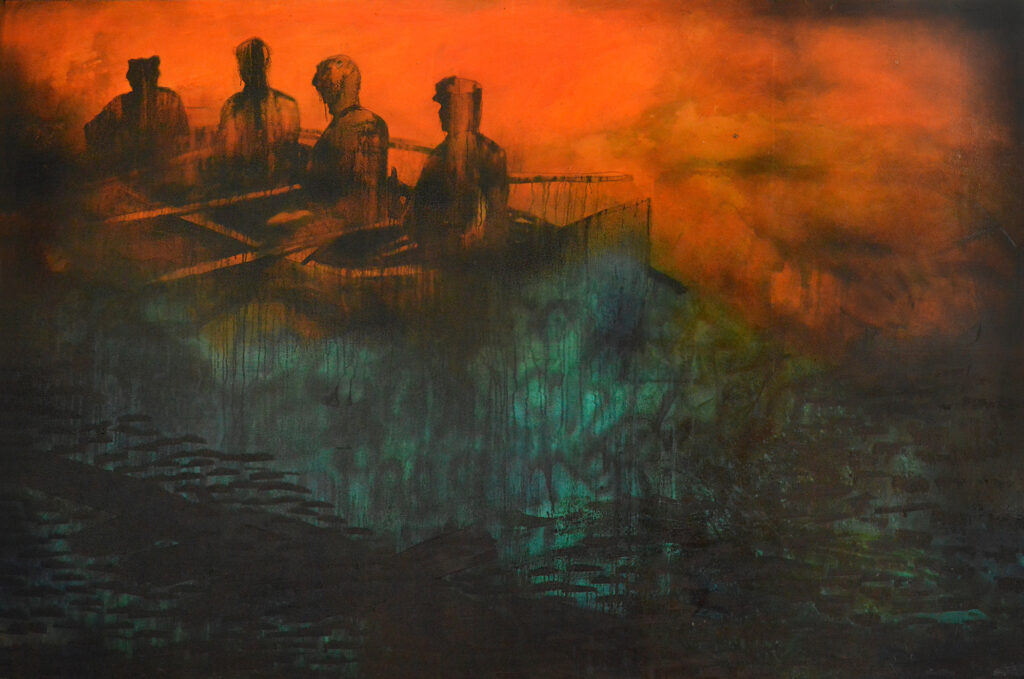
With a loan courtesy of Quinnipiac University, in conjunction with Ireland’s Great Hunger Museum of Fairfield, the Lockwood-Mathews Mansion Museum will open a new exhibition on March 12 titled, A Journey of Hope: The Irish American Immigrant Experience, followed by a reception at 5:30-7:30 p.m. generously sponsored by O’Neill’s Irish Pub and Restaurant and featuring music by the Shamrogues. The show will run through May 17, 2026, and feature paintings and sculptures displayed in the Mansion’s Billiards Room/Art Gallery as well as in the Servants’ Quarters.
Viewing will be included with the purchase of a guided tour. Purchase tickets on our Eventbrite page with this link>
Former President of Ireland, Michael D. Higgin stated that “The Irish Famine of 1845 to 1852 was the greatest social calamity, in terms of morality and suffering, that Ireland has ever experienced.” From 1845 to 1855, over 1.5 million people emigrated from Ireland to America searching for a better life. This exhibition will highlight the topic of Irish immigration to America in the 19th century using art as a visual reference. This exhibit will connect directly to the early history of the Mansion, when most of the domestic staff was Irish and where today’s visitors will have an opportunity to revisit the Servants’ Quarters with an installation of sculptures by Irish American artists.
Loretto Leary, Co-Chair of the Connecticut-Ireland Trade Commission said: “Forced from their homes by forces beyond their control, seeking not pity but the chance to forge new lives in an unfamiliar land, Irish famine immigrants set out on journeys that still echo today. From 1845 to 1852, this watershed moment in Irish history sent ripples across the Atlantic, shaping America in ways that are still felt, and mirroring the experiences of refugees around the world today.”
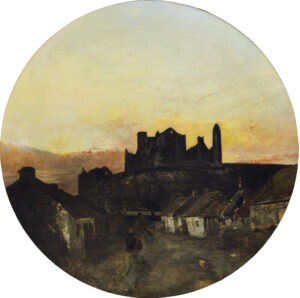
Ireland’s Great Hunger Museum of Fairfield contains the world’s largest collection of Great Hunger-related art by noted contemporary Irish and Irish American artists as well as several period paintings by some of Ireland’s most important 19th-century artists. Ireland’s Great Hunger Museum of Fairfield exists at the intersection of art, history, and moral imagination. Rooted in the story of Ireland, but speaking to the wider world, the museum strives to remember what happens when a society turns away from its most vulnerable – and to honor the resilience of those who endure.
This exhibition will be curated by Ryan Mahoney who is the Project Manager at the Springfield Museums in Springfield, MA. A graduate of St. John Fisher College (BA) and the University at Albany (MA), Mahoney has over 15-years of experience working in the museum field, including serving as Executive Director for both the Irish American Heritage Museum in Albany, NY and Ireland’s Great Hunger Museum at Quinnipiac University in Hamden, CT. Active in the Irish American Community, Mahoney has served as a national board member for the Irish American Cultural Institute and as a board member of the United Irish Societies of the Capital District. He also was an active member of the Albany St. Patrick’s Day Parade Committee. In 2016, Mahoney was named a recipient of the 40 under 40 Award by the Irish Echo.

View the Exhibition Catalogue>>
A Journey of Hope exhibition made possible by
a loan courtesy of Quinnipiac University, in conjunction with Ireland’s Great Hunger Museum of Fairfield
 |
 |
LMMM’s contemporary art exhibits are sponsored in part by Designer/Artist/Author Gail Ingis, and Kathy Olsen, CPA. LMMM’s 2026 programs are made possible in part by LMMM’s Founding Patrons: The Estate of Mrs. Cynthia Clark Brown; LMMM’s Leadership Patrons: Dr. Michele & Attorney Miklos Koleszar and The Sealark Foundation, Inc.; and LMMM’s 2026 Season Distinguished Benefactors: The City of Norwalk, The Maurice Goodman Foundation, Inc., and Lockwood-Mathews Foundation, Inc.